USLI

Taking on national engineering challenges by building custom rockets to hit precise altitude targets and complete real-world scientific experiments.

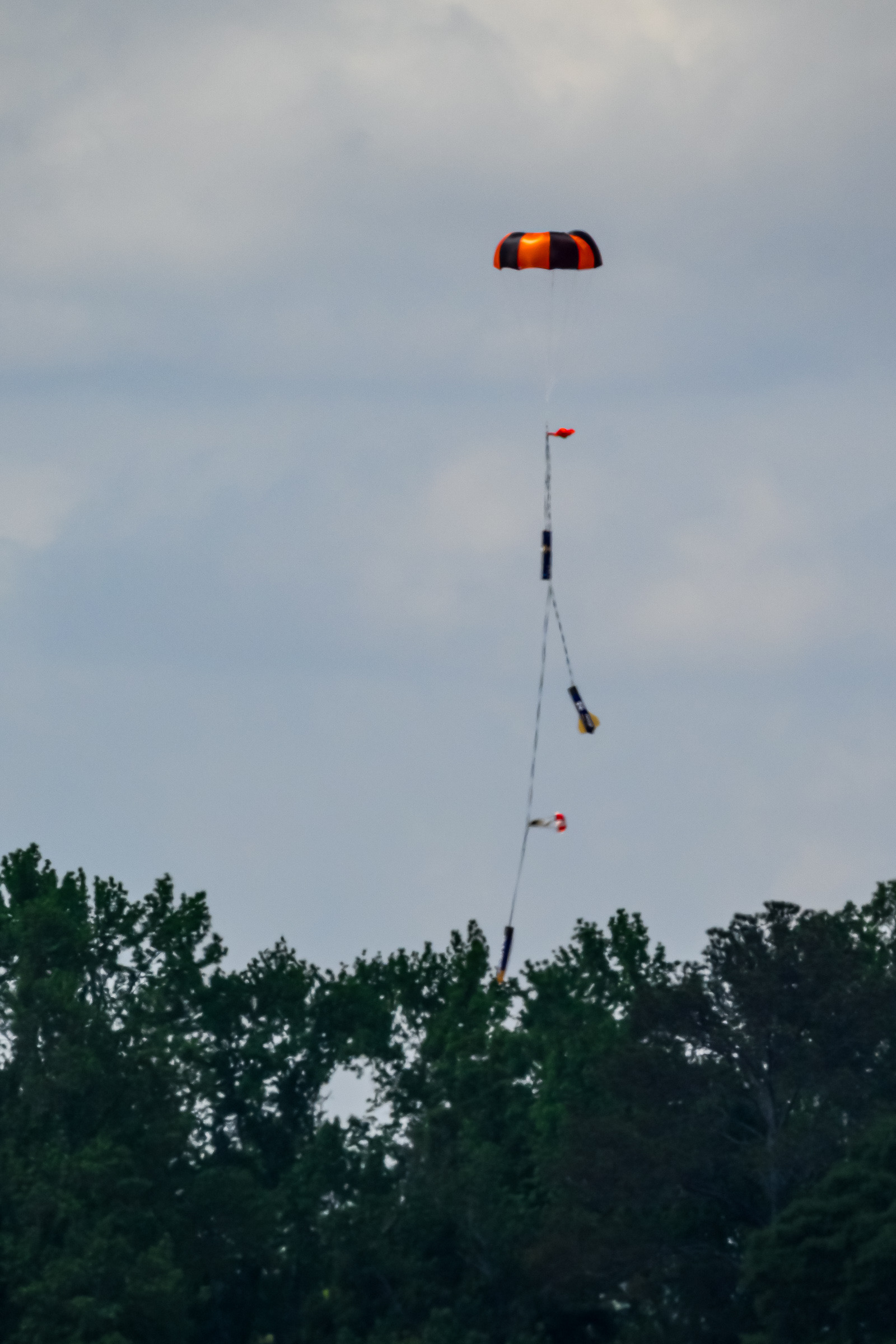
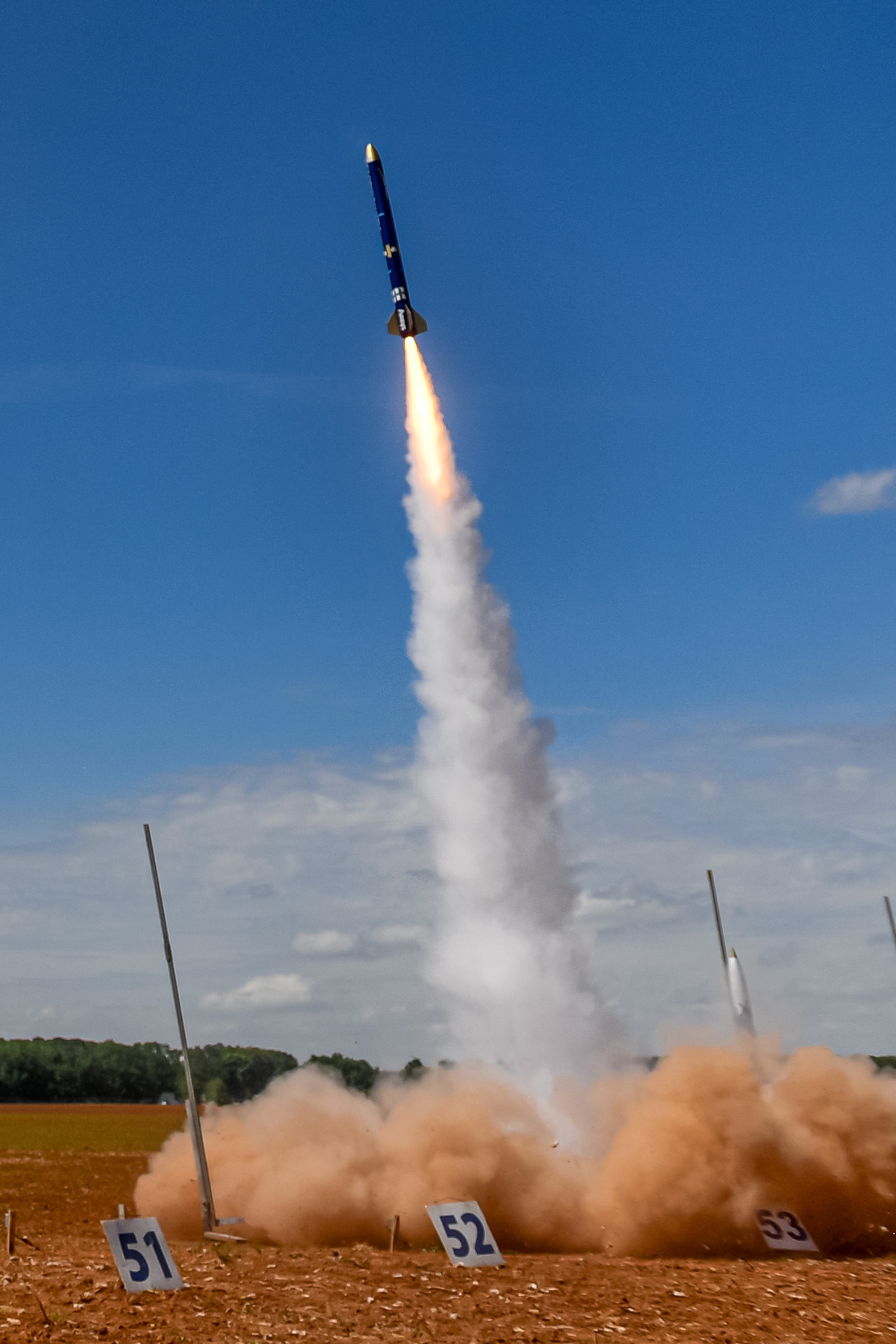
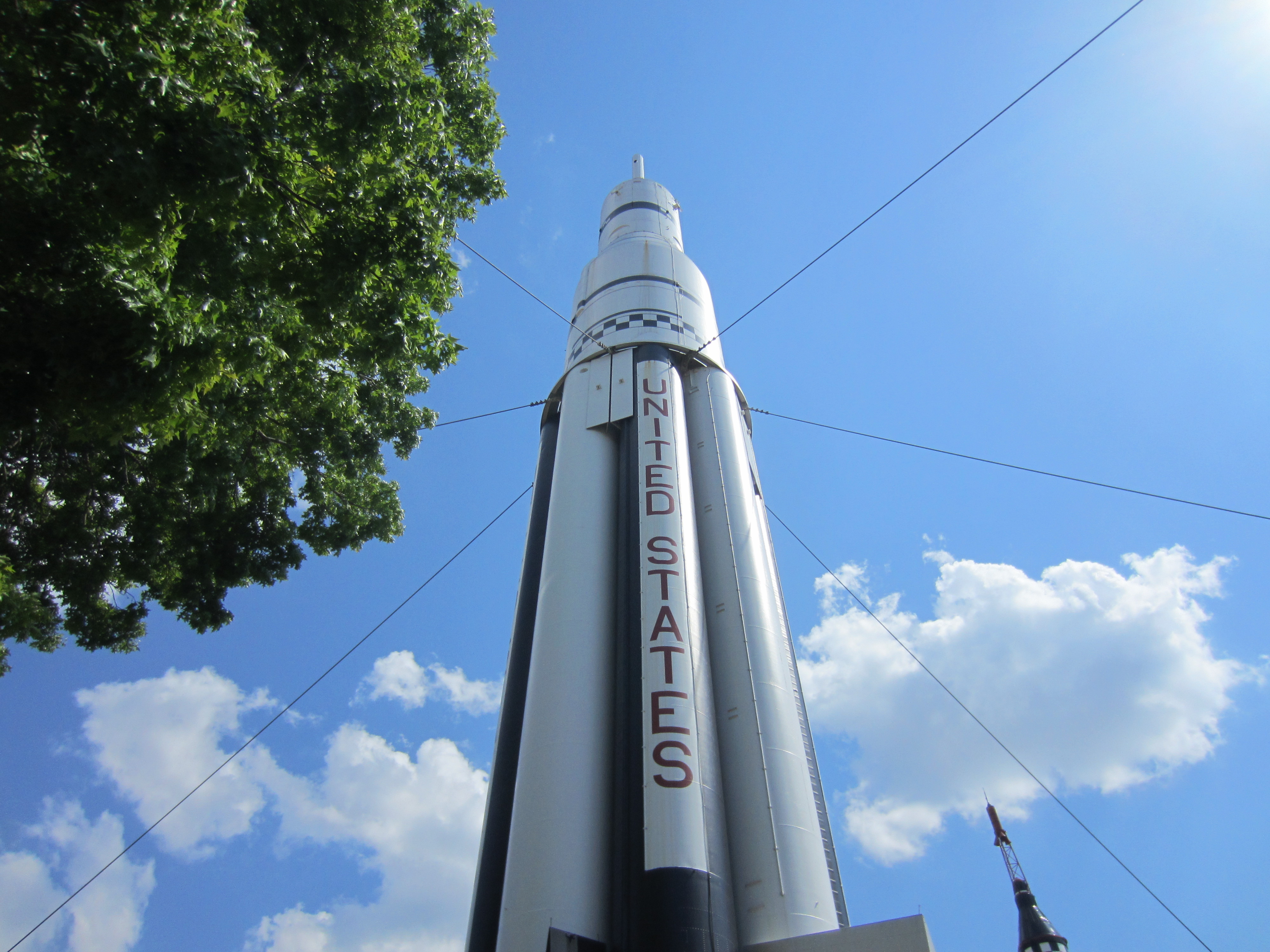
Rocket liftoff at NASA Marshall Space Flight Center
The Competition at a Glance

The NASA Challenge

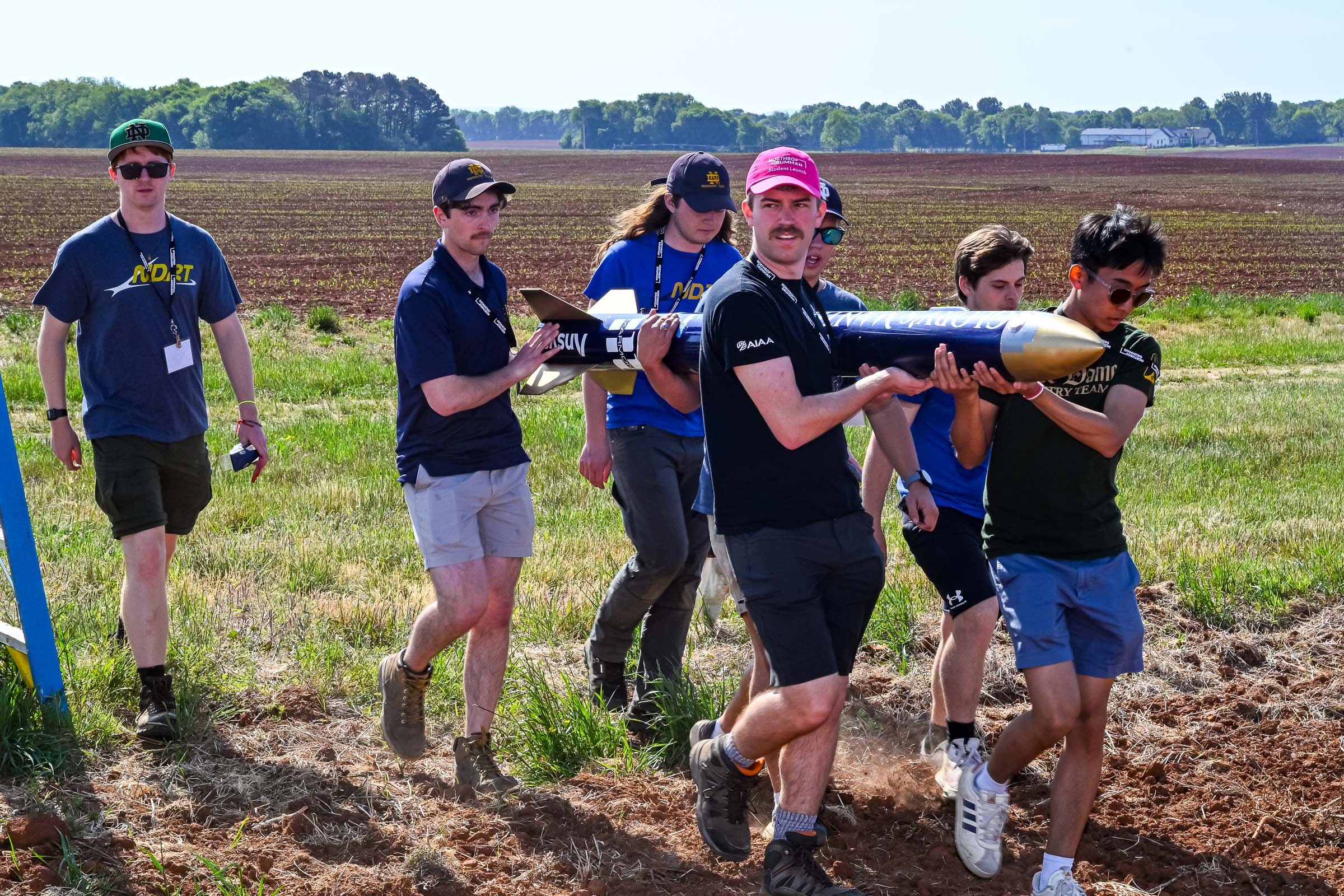
Each year, NASA challenges university teams across the country to build and fly a high-powered rocket from scratch. The mission sounds simple, but it takes careful planning: our rocket must climb to an exact height, run a custom science experiment, and land safely back on the ground.

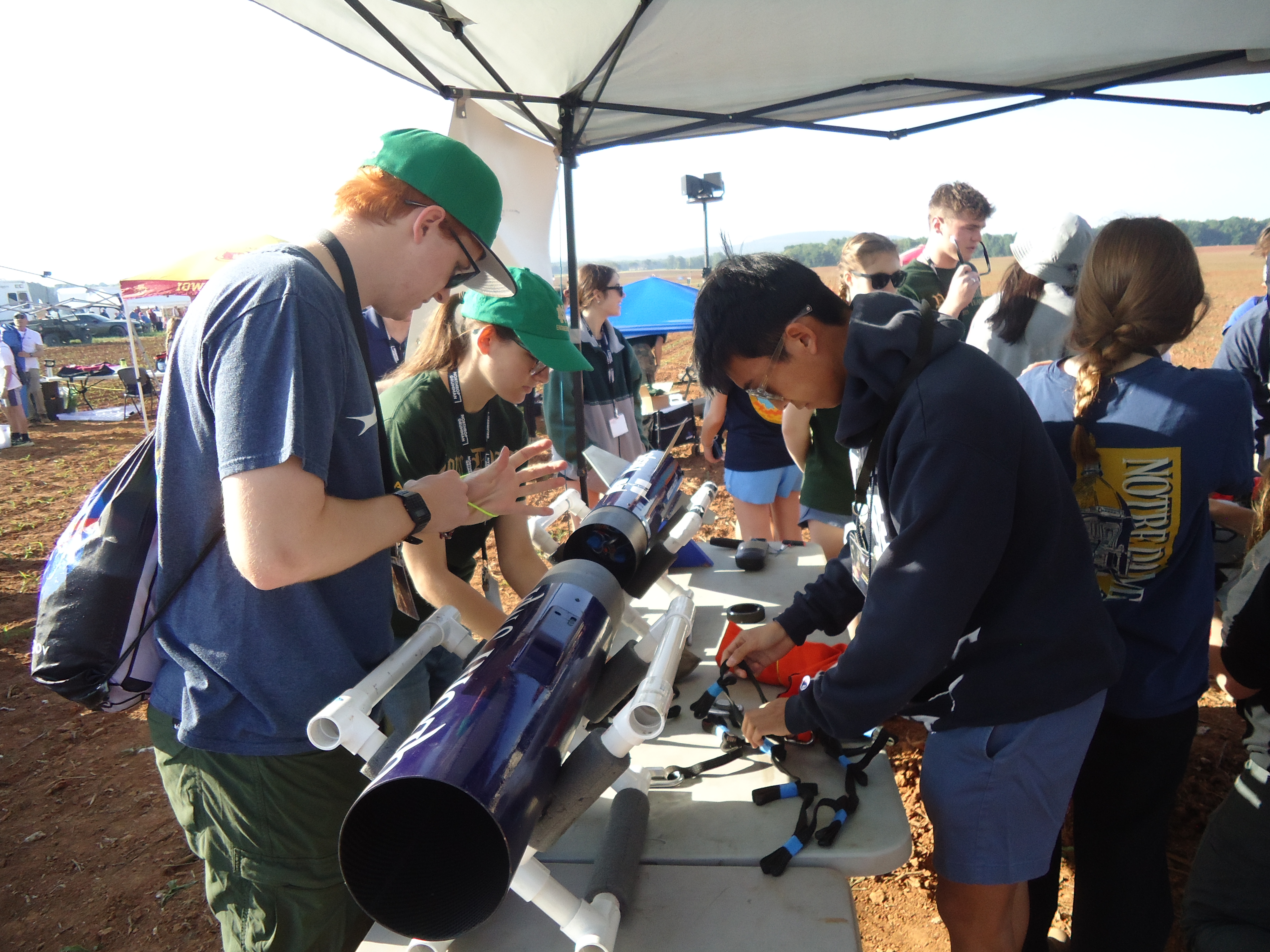
Our season starts every fall when we submit a detailed project plan outlining our designs, timeline, and safety procedures. Throughout the year, we follow strict testing routines and engineering milestones to make sure our rocket is reliable, safe, and ready for launch day.

Explore USLI Rules
The Fighting Irish in Huntsville

OUR NATIONAL CHAMPIONSHIP HISTORY

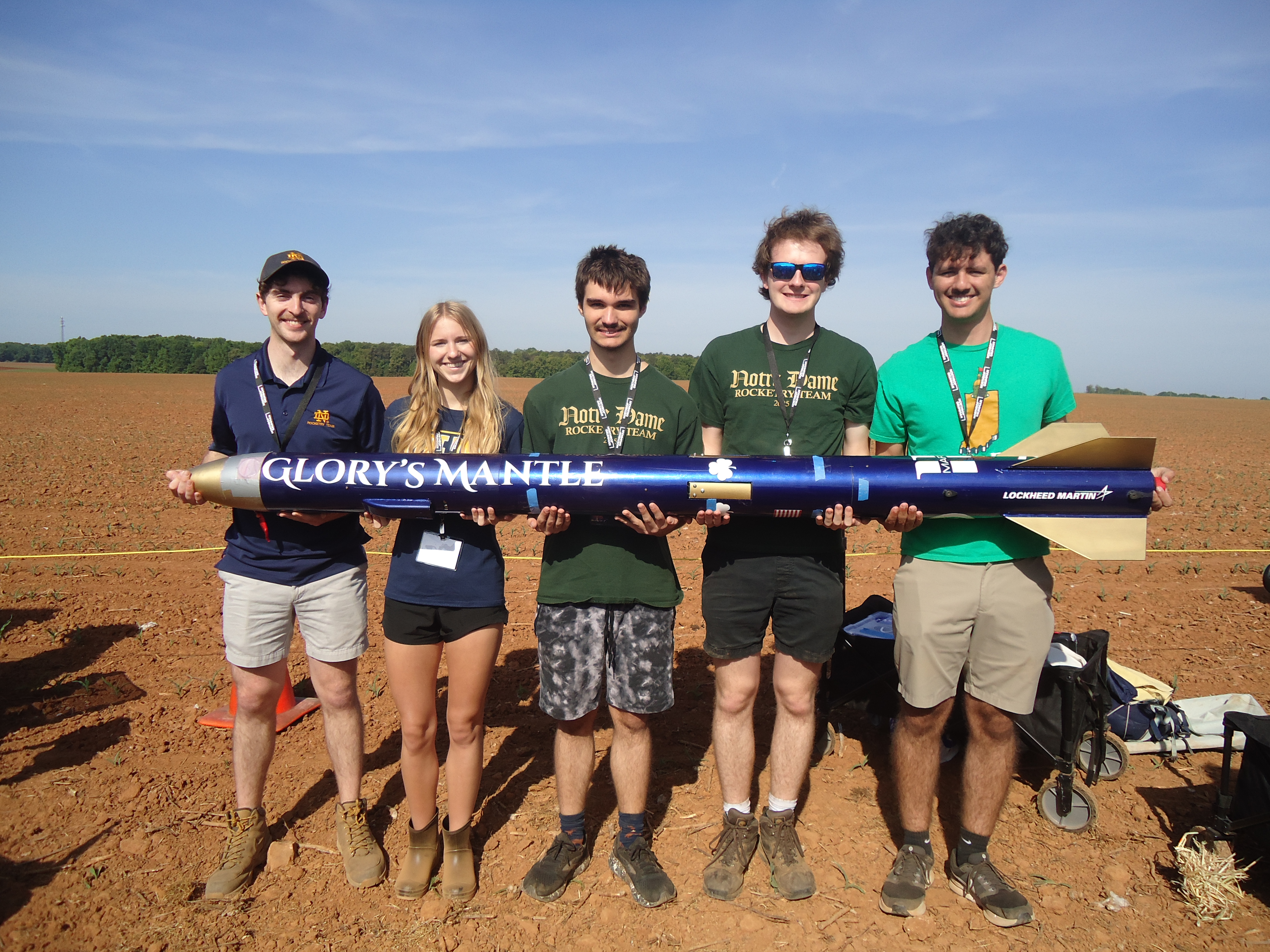
Our team has been competing in NASA's national competition since 2011. Each year, we spend months designing, building, and test-flying multiple practice rockets to earn our spot at the final launch at NASA’s Marshall Space Flight Center in Huntsville, Alabama.

All that hard work paid off in 2024 when Notre Dame won the Overall National Championship title. Beyond winning, this project gives our students real-world engineering experience, leadership skills, and the practical knowledge they need to launch successful technical careers.
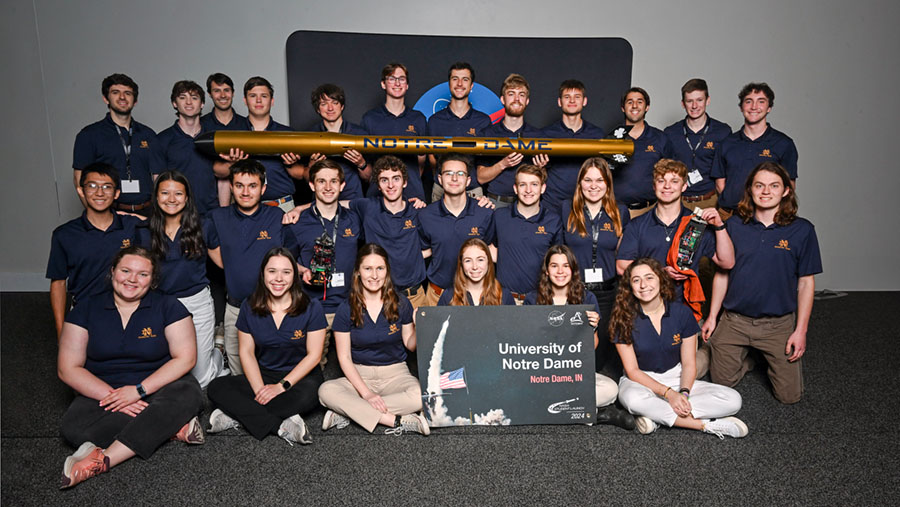
NDRT team celebrating with the National Championship trophy

HOW WE WORK: THE NASA PROJECT PHASES

Just like professional space agencies, we follow a strict multi-step schedule to move our ideas from paper into the air..

01. PDR

Preliminary Design

We present our initial designs, math calculations, and main ideas to NASA engineers for feedback.

02. CDR

Critical Design

We finish all technical drawings, run fluid simulations, and get approval to start manufacturing parts.

03. FRR

Flight Readiness

We prove the rocket is built correctly by completing test launches with smaller models and full-scale prototypes.

04. ADDENDUM

Final Adjustments

We share data from test flights and make last-minute adjustments before heading to competition.

05. PLAR

Post-Launch Review

After launch day, we study flight recordings, track sensor data, and analyze overall performance.

Meet The Design Squads

Building a rocket takes many different skill sets. Our team splits into seven focused groups to handle every part of the mission.

Vehicles

Responsible for the exterior of the rocket, including body tubes, fins, and nose cone, as well as flight performance simulations.

View More

Recovery

Ensures safe landing using two modules that deploy parachutes via sensors and ejection charges to meet strict kinetic energy limits.

View More

Payload

Solves the annually changing NASA design challenge, ranging from self-piloting helicopters to soil collection devices.

View More

Apogee Control

Designs a non-scoring payload that extends active flaps based on IMU data to purposefully slow an overshooting rocket to exact apogee.

View More

Systems

Outlines requirements verification, ensuring compliance via drag coefficient and center of pressure wind-tunnel testing.

View More

Electrical

Designs custom circuit architecture (PCBs) to integrate sensors/actuators and writes the embedded code for modules to operate efficiently.

View More

Safety

Identifies and mitigates all potential risks to personnel, property, and the environment across all construction and launch procedures.

View More
WORKING WITH OUR COMMUNITY

STEM Outreach

Engineering is about more than just flying rockets, it's about sharing what we learn. We regularly visit local schools and youth clubs around South Bend to run hands-on science activities, helping kids discover how fun building things can be.

View Community Operations
Team giving STEM demonstration to local students